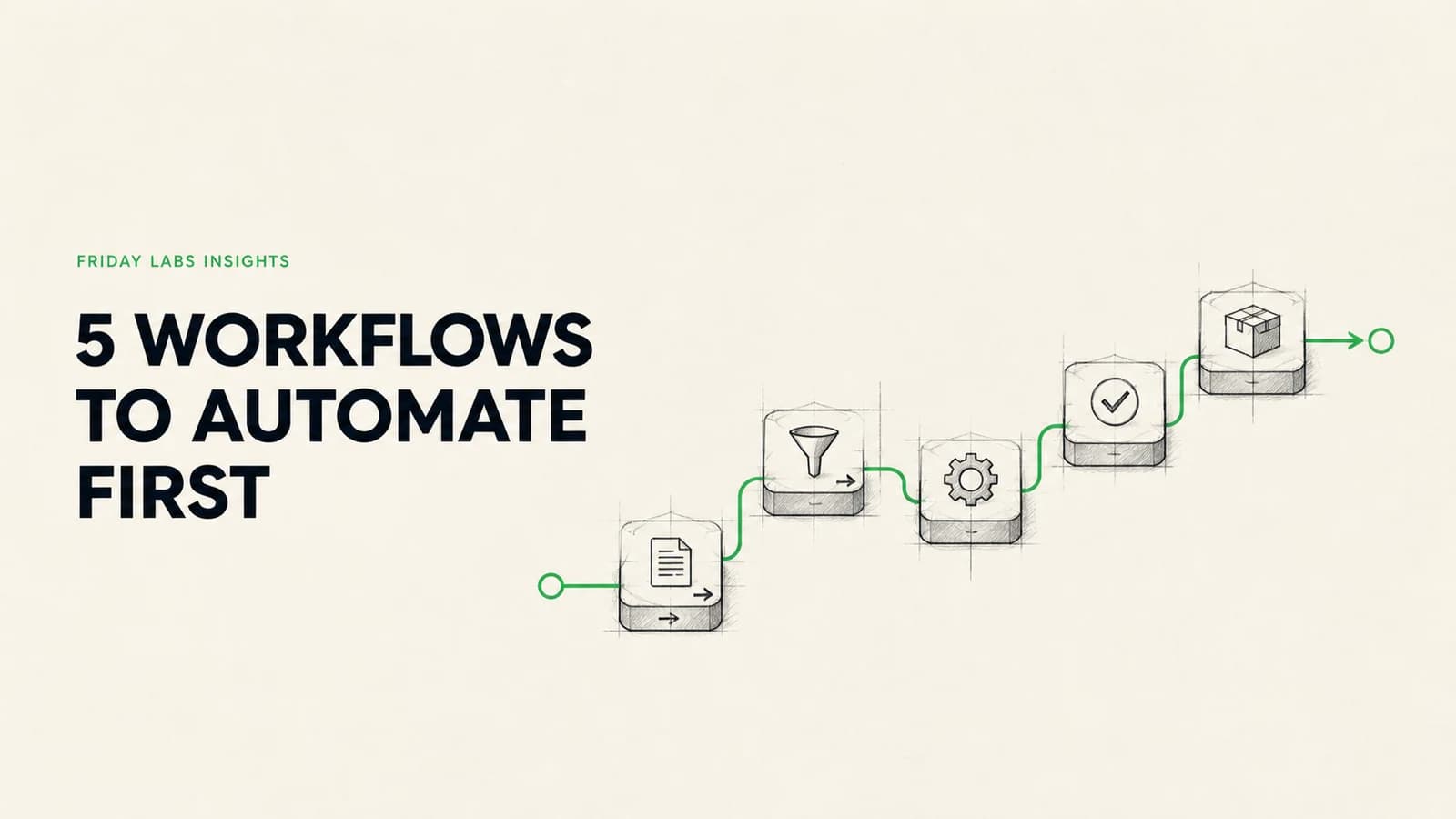
Every business is unique, but the first wins usually are not. Across the audits we run, the same five workflows show up again and again as the highest-return starting points. If you are wondering where to begin, begin here.
1. Lead follow-up
Speed to lead is still the highest-leverage number in sales. Research has shown for years that responding within five minutes dramatically raises contact and conversion rates, yet most teams take hours because follow-up depends on a human seeing a notification.
What the automation looks like: a new lead from your website, ads, or DMs instantly gets a personal-feeling first touch, gets logged in your CRM, and gets routed to the right salesperson with context. If the lead replies, a human takes over. If not, the system follows up on a schedule until they book or opt out.
Why it is first: it directly creates revenue, which makes it the easiest win to measure and the fastest way to fund the rest of your roadmap.
2. Client onboarding
The window between "yes" and "value delivered" is where refunds, cold feet, and bad first impressions live. Most onboarding is a relay race of emails, forms, and invites where any dropped baton stalls the whole thing.
What the automation looks like: the moment a contract is signed or a payment clears, the client gets their welcome sequence, intake forms, and scheduling links. Internally, the project gets created, the team gets assigned, and nothing waits for someone to remember.
Why it is early: it touches every single client, and its quality sets the tone for the whole relationship.
3. Reporting
If someone in your business spends part of every week copying numbers from one place into another so somebody else can look at them, that entire job is automatable, and it is usually the least fulfilling work that person does.
What the automation looks like: your key numbers pull automatically from your tools into one dashboard or a scheduled summary that lands in your inbox or Slack. Same numbers, same format, zero assembly time.
Why it matters more than it seems: beyond the hours, automated reporting removes the version-of-the-truth arguments. Everyone reads the same numbers from the same source.
4. Invoicing and collections
Manual invoicing leaks money twice: the hours spent creating and chasing invoices, and the revenue that slips when chasing does not happen. Awkwardness compounds it, because nobody enjoys writing the third reminder email.
What the automation looks like: invoices generate from your CRM or project data, send on schedule, and remind politely and persistently until paid. Payment updates your books automatically.
Why it is a favorite: the system never feels awkward about following up, so collections actually happen. Most businesses see their average days-to-paid drop within the first month.
5. The inbox
Email is where every other broken process hides. Requests, approvals, scheduling, and support all pile into one unstructured inbox, and the owner becomes the bottleneck for all of it.
What the automation looks like: an AI layer that triages incoming mail, drafts replies for the routine categories, extracts action items into your task system, and escalates only what genuinely needs a human decision.
Why it is last on this list: it is the biggest quality-of-life win but the hardest to measure, so it lands better once the first four have proven the approach.
How to sequence them
Do not build all five at once. Rank them for your business by monthly return divided by build cost, ship one, measure the hours saved for two weeks, then start the next. A useful way to rank them is a proper audit of your systems: interviews with the people doing the work, a map of where time actually leaks, and ROI projections for each fix.
Every business we have ever audited had at least three of these five leaking real money. The order varies. The presence of the leaks almost never does.