Most businesses know AI could save them time. Very few know where to start. The tools change weekly, every vendor promises the world, and copying what worked for another company rarely works for yours.
That is the problem an AI Opportunity Audit solves. Here we will cover what an AI Opportunity Audit is, what goes into one, who needs one, and what you should walk away with.
What is an AI Opportunity Audit?
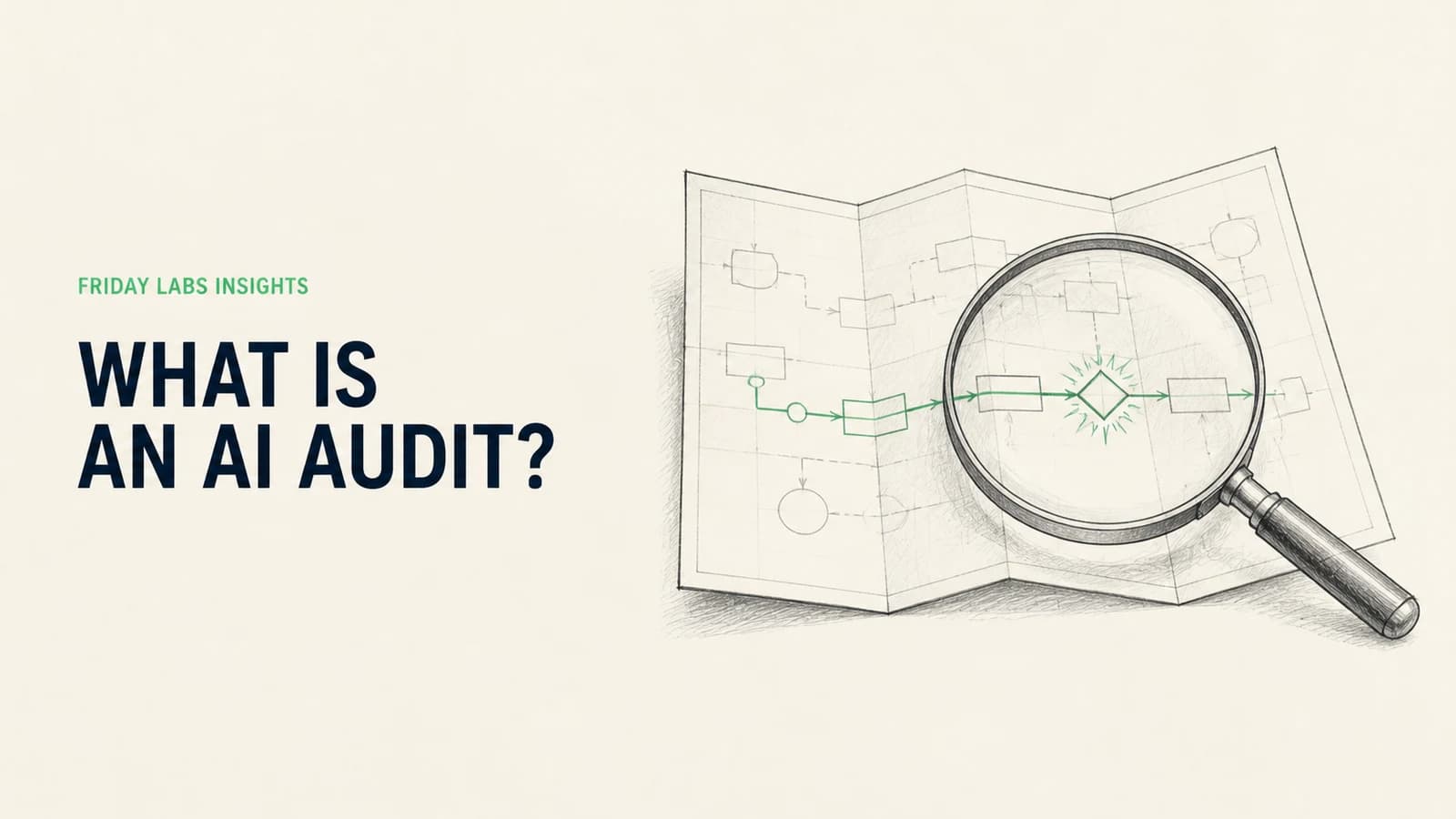
An AI Opportunity Audit is a structured review of how your business actually operates, designed to find the specific places where AI and automation will save the most time or make the most money. It looks at your workflows, your tools, your team's daily work, and the handoffs between them.
The key word is your. AI is different in every business, because the unique systems you already have are what make your business yours. An audit does not start from a list of tools. It starts from your operations and works backward to the technology.
A good audit answers three questions:
- Where does your team lose the most hours every week?
- Which of those losses can AI or automation realistically remove?
- What is the return on each fix, and in what order should you build?
Who needs an AI Opportunity Audit?
Any business can get value from one, but an audit matters most if:
- Your team is growing. Every new hire multiplies the cost of a broken process. Fixing the process before you hire is almost always cheaper.
- You are drowning in tools. If your team lives in ten different apps and still does manual copy-paste between them, the problem is the connections, not the tools.
- You have tried AI and it did not stick. Most failed AI projects fail because they automated the wrong thing, not because the technology was not ready.
- You are about to invest. Before you spend on custom software or a new platform, an audit tells you whether a simpler fix gets the same result.
What goes into an AI Opportunity Audit?
A serious audit is interview-driven. Software can scan your tool stack, but it cannot see the workarounds, the spreadsheet someone updates every Tuesday, or the approval that always gets stuck in one person's inbox. Those live in your team's heads, and interviews are how you get them out.
A complete audit generally includes:
| Component | What it covers |
|---|---|
| Process interviews | Hours of structured conversations with you and your team, walking through the business one process at a time |
| Time wins | Simple statements of value: save X hours by automating Y |
| Operations map | What the business actually runs on, and where it leaks time and money |
| Benchmark analysis | Who in your industry runs operations at the highest standard, and what good looks like for a team your size |
| Bottleneck analysis | Process mapping plus direct access to your tools, to find the best qualified builds |
| ROI projections | What each proposed system saves or earns, so you can rank them |
What should you walk away with?
The deliverable matters more than the process. At minimum, you should get:
- A prioritized list of automation ideas, each with an ROI projection and a build concept. Sometimes that is ten ideas, sometimes far more. It depends on what your systems reveal.
- A written roadmap detailed enough that you could hand it to any competent builder, including your own team, and have them execute it.
- A presentation session where the findings are walked through live and every question gets answered.
That last point is a useful filter when you are comparing providers. If the audit only makes sense if you also buy the implementation from the same company, it is a sales document, not an audit. The roadmap should be yours to keep and act on either way.
How much does an AI Opportunity Audit cost?
Pricing varies with the depth of the interviews and the size of the business, but expect a fixed fee rather than an hourly rate for a well-defined audit. Many providers, including Friday Labs, credit the audit fee toward implementation if you continue, which makes the audit effectively free when you build.
The bottom line
You would not renovate a house without an inspection, and you should not rebuild your operations around AI without an audit. Map the systems first, rank the opportunities by return, then build in order. It is the difference between AI that demos well and AI that quietly runs your business every day.